Launch Lab Diamond Jewelry Brand With Custom Private Label Jewelry Solutions
Running a jewelry brand in today’s competitive market requires more than eye‑catching finished goods. Many emerging jewelry entrepreneurs and established retailers struggle to turn brand visions into sellable inventory without heavy upfront investment in in‑house production facilities. Working with an experienced custom fashion jewelry manufacturer removes most of these barriers, enabling businesses to roll out cohesive lab‑grown diamond collections under their own brand identity. Whether you aim to refresh existing product lines or debut an entirely new brand identity, private label jewelry opens practical pathways to bring unique lab diamond pieces to target buyers.
Working directly with a factory partner simplifies the whole product development workflow for new market entrants. Instead of coordinating multiple separate suppliers for stones, metal fabrication, branding markings and packaging, a qualified manufacturer handles every critical production phase under one roof. Brands can avoid costly tooling setup fees for small‑to‑medium batch orders, test market responses with flexible order volumes, and keep full control over brand storytelling presented on each finished piece. Lab‑grown diamonds continue to gain traction among modern consumers for ethical sourcing, attractive price points and comparable visual performance against mined diamonds, making lab‑centered lines a high‑potential direction for both online stores and physical jewelry boutiques.
Turning brand concepts into tangible lab diamond product ranges
Every successful lab diamond jewelry line starts with clear product positioning. Before moving to sample creation, brand owners should define core target audiences, preferred metal options, target price brackets and key product categories for their storefronts. Many brands prioritize everyday wearable items alongside statement‑focused hero pieces, balancing steady turnover with high‑margin showcase goods.
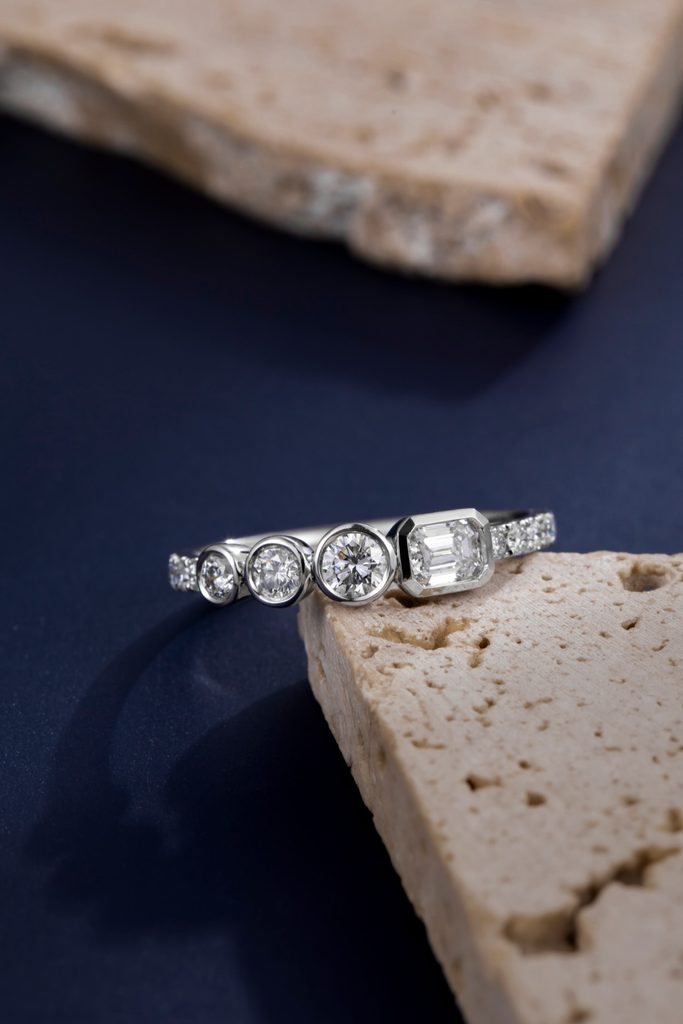
Custom lab diamond rings remain one of the highest‑demand categories for private‑label lab diamond projects. Retail partners can select stone shapes, carat weights, band widths, metal finishes and setting styles instead of settling for generic mass‑produced ring stock. The manufacturing team adjusts stone proportions, shank thickness and surface polishing to match brand aesthetic requirements. Brands may opt for solitaire builds, halo layouts or stacked multi‑stone constructions, and each sample can go through multiple revision rounds until design standards are fully satisfied.
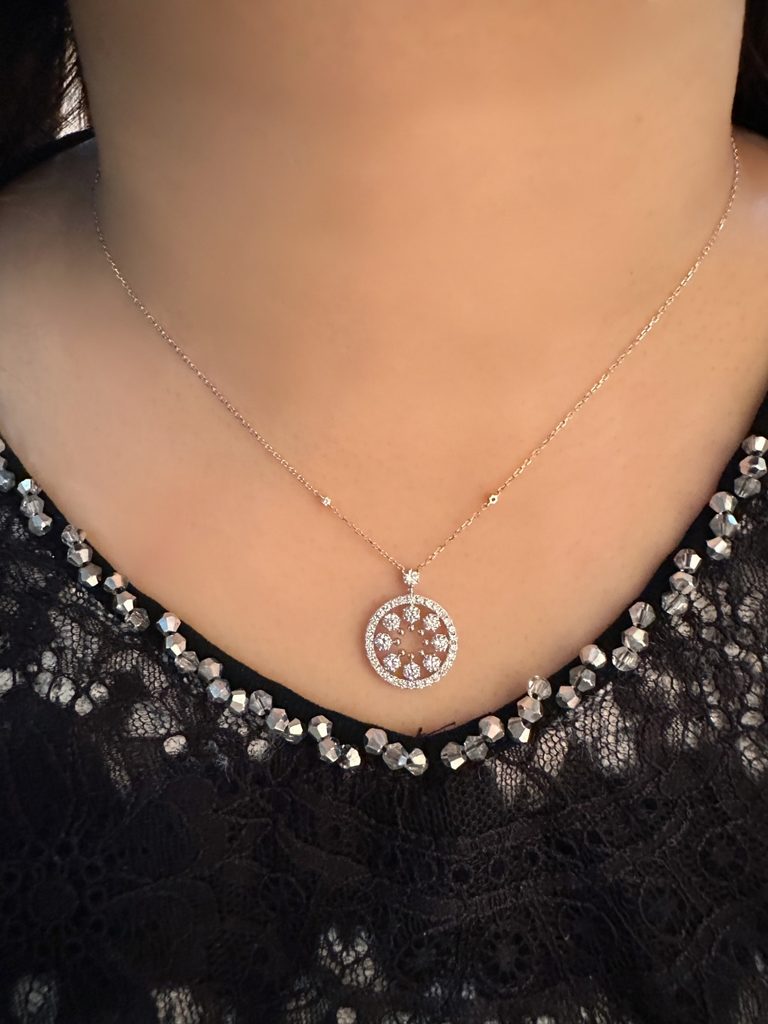
Beyond ring offerings, custom lab diamond pendants expand collection depth for retailers looking to capture broader customer segments. From minimalist single‑stone pendants to layered multi‑stone layouts, these items serve excellent add‑on sales opportunities alongside ring purchases. Manufacturers can adjust chain lengths, bale structures and stone mounting techniques to fit brand‑specific visual standards. Brands can request subtle silhouette tweaks, metal texture variations and stone placement adjustments to ensure pendants align perfectly with the rest of their lab diamond assortment.
When brands leverage factory‑supported custom development, they avoid the limitations of generic wholesale catalog items. Unique silhouette details, stone layout adjustments and subtle finishing differences help set inventory apart from competitors selling identical ready‑made stock. This differentiation directly supports higher perceived value and better profit margins for retail partners.
Streamlined branding implementation for private‑label merchandise
True private label work goes far beyond simple product customization. Brand owners want every customer touchpoint to reinforce their own brand identity, from markings on jewelry pieces all the way to unboxing experiences. Reliable manufacturing partners integrate brand‑specific branding steps seamlessly within standard production cycles, without creating unreasonable extra lead‑time delays.
Laser engraving sits at the center of brand personalization. Factories can stamp brand logos, brand initials, serial identifiers or collection markers onto inner ring bands, pendant backs and clasp sections. Engraving depth and font style can be fine‑tuned to prevent quick wear after repeated customer use. Apart directly on‑item marking, custom packaging solutions add another layer of brand immersion. Custom printed boxes, fabric pouches, insert cards and outer shipping cartons can all carry brand graphics and color schemes, so end‑users receive fully branded goods with zero reference to the original manufacturer.
Private label jewelry workflows combine product customization, in‑house branding marking and custom packaging services into one unified production pipeline. Brand clients retain full ownership of final designs, and manufacturers respect non‑disclosure agreements to prevent exclusive styles from leaking to competing businesses. This setup suits startup brands, boutique retailers and existing fashion jewelry labels that want to add lab‑diamond‑focused sub‑collections to their selling portfolios. Clients do not need any in‑house jewelry‑making expertise; clear reference images, mood boards and written specification sheets are enough for the factory to move forward with sampling and mass production.
Practical sourcing strategies for scalable lab diamond inventory
Many brand builders underestimate the importance of flexible sourcing models when scaling a lab diamond jewelry business. Buying only pre‑made stock limits market differentiation, while fully bespoke one‑off designs drive up unit costs and extend lead times significantly. A balanced hybrid approach delivers the best outcomes for most growing jewelry brands.
lab diamond wholesale channels operated by the manufacturing partner deliver consistent stone supply for private‑label projects. Working with a manufacturer that holds in‑house lab diamond inventory reduces third‑party supplier risks, quality inconsistencies and shipping delays between separate vendors. Brand partners can specify stone color grades, clarity standards and cut preferences for every order. Factories can source HPHT or CVD lab‑grown diamonds according to brand requirements, and provide stone grading documentation to support retail‑level product descriptions.
Retail partners can choose from three common sourcing approaches. First, modify existing proven base designs from the factory catalog by adjusting stones, metal finishes and branding marks; this method keeps sampling costs low and shortens lead times. Second, build fully original designs from sketches or reference files for signature hero products. Third, create limited‑edition small‑batch runs for seasonal marketing campaigns. Each option supports different business goals, whether the priority is fast market entry, signature product differentiation or limited‑run promotional inventory.
Manufacturers also provide important technical guidance during specification finalization. Experienced production teams point out practical concerns such as setting durability for daily wear, metal‑alloy suitability for sensitive‑skin consumers, and realistic tolerance ranges for mass‑batch production. This hands‑on feedback prevents brands from approving design concepts that look appealing in renderings yet perform poorly in real‑world customer usage.
Quality control and order execution for brand‑ready output
Consistent quality across every production batch defines long‑term brand reputation. When brands outsource manufacturing work, clear quality‑check protocols must be built into every production stage. Reputable custom fashion jewelry manufacturers run multi‑phase inspections before goods ship out to brand clients.
Sample validation forms the first critical checkpoint. Pre‑production samples replicate all design details, stone selections, engraving marks and packaging elements. Brand teams review physical samples, note adjustments, and sign off before mass manufacturing commences. This step catches dimensional errors, finishing mismatches or branding misprints before large material investments take place.
During mass production, inspection teams verify stone security in settings, metal surface quality, engraving accuracy and packaging print consistency. For lab diamond items, each piece gets cross‑checked against agreed‑upon stone grade specifications. Defective units get separated and reworked rather than being packaged for shipment. Once batches pass internal factory inspections, finished goods ship directly to brand warehouses or fulfilment centers.
Lead time transparency forms another key part of reliable manufacturer cooperation. Sampling cycles, production timelines and shipping windows should be communicated clearly at project kick‑off. Brands can plan marketing calendars, website updates and retail launch timelines around confirmed production schedules. Trusted manufacturing partners also maintain clear communication channels for questions during every production phase.
Business growth opportunities for lab diamond private‑label operators
Once brands establish stable manufacturing partnerships, they can steadily expand their lab‑diamond‑focused product portfolio. Retail operators can test market feedback from initial collections, then expand high‑selling silhouettes into new metal variants, stone sizes and matching accessory sets. Successful custom fashion jewelry brand operators frequently combine lab‑diamond core collections with complementary fashion‑oriented pieces to widen customer buying options.
Digital retail channels create massive growth potential for private‑label lab diamond jewelry brands. Brands can showcase exclusive private‑label designs on e‑commerce websites, social commerce platforms and marketplaces. Original, branded inventory helps sellers stand out amid crowded marketplaces flooded with identical generic jewelry imports. With custom packaging and internal brand markings, every product reinforces brand memory for repeat buyers.
Boutique physical retailers also benefit greatly from private‑label lab diamond solutions. Store owners can offer exclusive pieces customers cannot purchase from competing nearby shops, driving store loyalty and increasing in‑store foot traffic. Even small‑scale operators can launch distinctive lab‑diamond jewelry lines without building expensive internal production workshops.
Choosing the right manufacturing partner directly shapes brand success. Beyond production capability, brands should evaluate supplier communication efficiency, design‑support capacity, quality‑control standards and flexibility over order batch sizes. A capable manufacturer acts not merely as a production facility but as a long‑term business partner, supporting brand growth as customer demand evolves over time. By leveraging private‑label manufacturing services, new and existing jewelry businesses can build recognizable, profitable lab‑diamond jewelry brands in today’s dynamic global jewelry marketplace.
Leave a Reply